Last update to the alert: 5 October 2026
Access to cartoonist Satish’s Instagram account was restored on 5 October 2026.
1 October 2026
Indian political cartoonists Manjul and Satish Acharya have had their content blocked on Instagram.
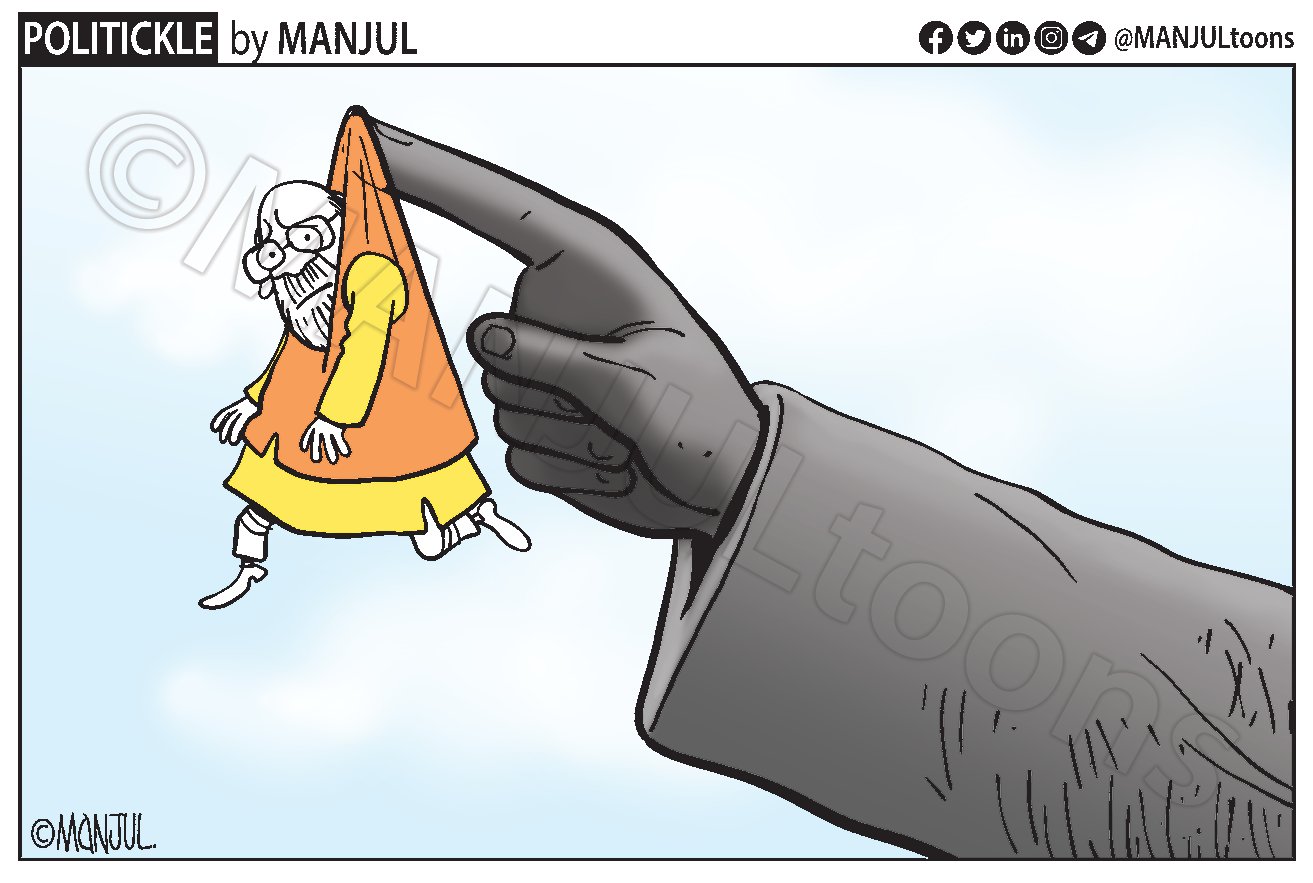
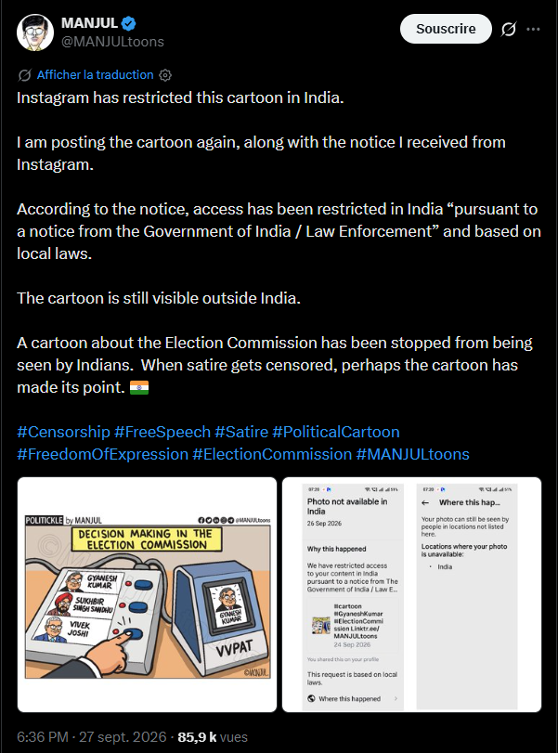
On 26 September 2026, Manjul received a notification from META informing him that his cartoon about the Indian Election Commission – which is currently at the centre of a growing scandal – had been blocked. Meta’s notification states that access to the content has been restricted within India, “in accordance with a notice from the Indian government/law enforcement agencies and under local legislation”.
Meanwhile, cartoonist Satish Acharya’s Instagram account has been suspended by Meta, with a message stating that access to his account has been “temporarily restricted in accordance with the legal requirements set out in the Information Technology Act”. A few days earlier, Satish Acharya had posted a cartoon on his Instagram account addressing the scandal surrounding the Indian Election Commission.
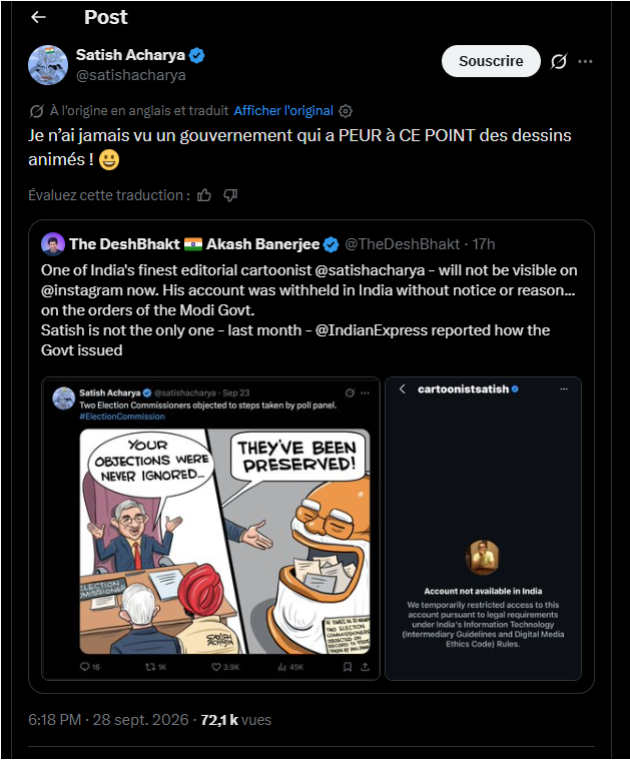
Recently, the Indian government has carried out several operations aimed at blocking a large amount of online content, including editorial cartoons. Several cartoonists have spoken out on social media to condemn this infringement of their freedom of expression. Cartoonist Gaurav Sarjerao, president of the Indian cartoonists’ association, Cartoonists Combine, has responded by condemning the online censorship targeting Indian press cartoonists.
Cartooning for Peace condemns the Indian government’s censorship of press cartoonists through the misuse of information technology regulations and calls for the unblocking of censored content.
Cartooning for Peace recommends that digital platforms establish a secure and independent mechanism for reporting and handling cases where online censorship is carried out by a state actor.
20 January 2025
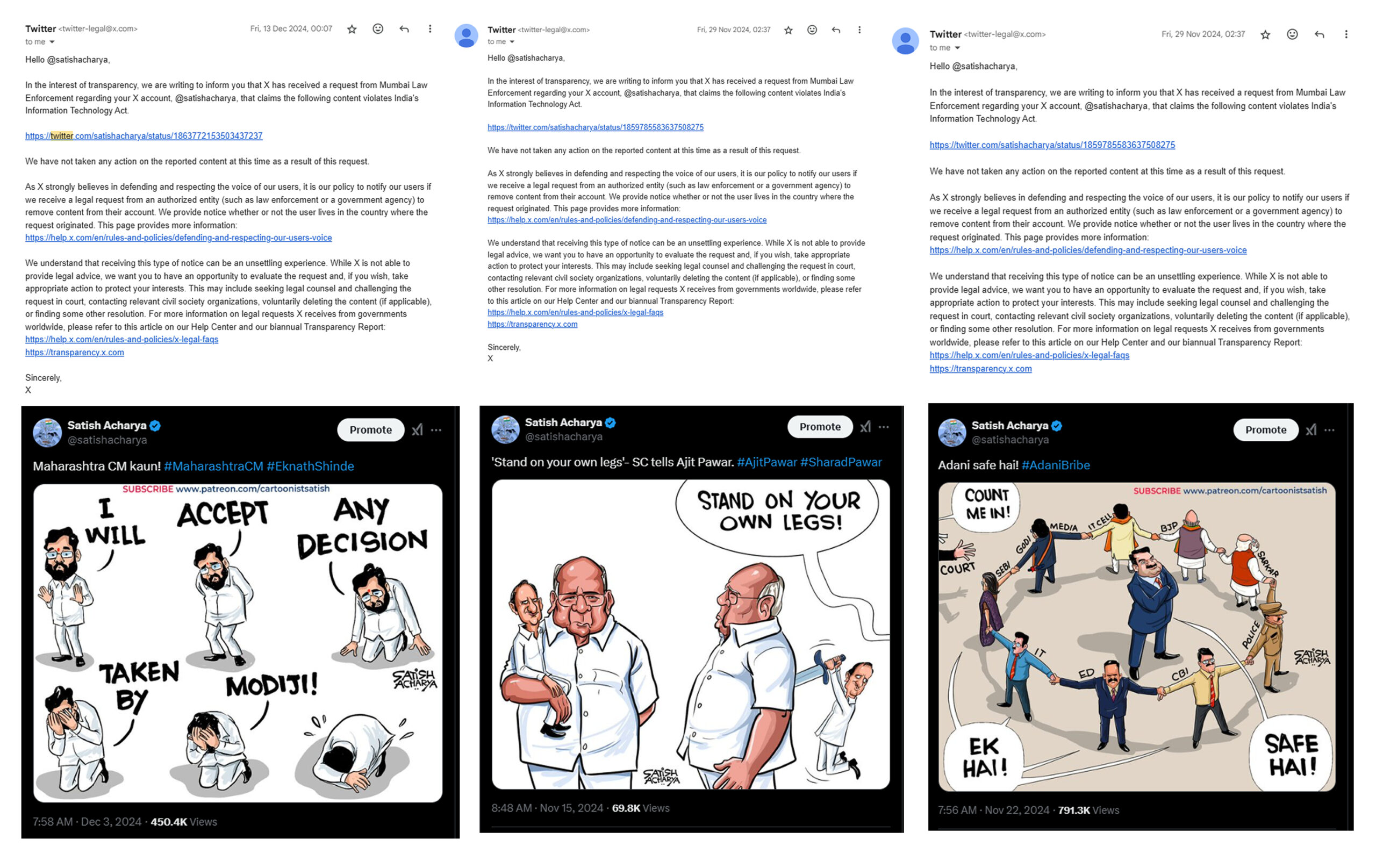
Two Indian cartoonists have been informed by X of several requests for action from the police regarding cartoons published on the platform
On 29 November 2024, Satish Acharya received two emails from the X platform informing him of a request from the Mumbai police to remove two of his cartoons. On 13 December 2024, the cartoonist again received an email from X, informing him of a new request from the police concerning a third cartoon.
On 3 January 2025, Indian cartoonist Manjul received a similar notice from the Mumbai police.
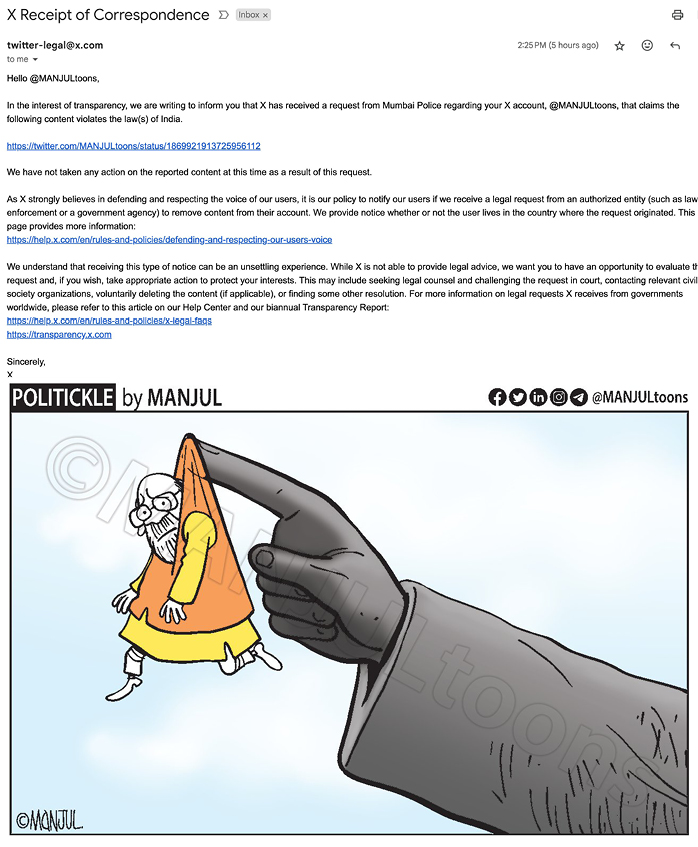
Satish Acharya’s cartoons are accused of violating India’s Information Technology Act, while Manjul’s are accused of violating ‘Indian law(s)’.
The two cartoonists, who had not received an official complaint, posted the notices on their social media and told The Telegraph Online that they were not afraid to continue exercising their right to freedom of expression.
These moves by the Indian authorities illustrate their increasing use of digital security laws to censor cartoonists, particularly since 2021 and the Information Technology Rules (Guidelines for Intermediaries and Code of Ethics for Digital Media), issued by the government under the Information Technology Act 2000. In June 2021, Manjul had already been the subject of similar proceedings for a cartoon published on Twitter. A few days later it was another Indian cartoonist, Bala, who was notified by Twitter of similar proceedings launched by the Indian authorities, for a cartoon published in September 2020.
While X did not respond to these requests and therefore did not delete the cartoons, Manjul stated that these notifications ‘have a dissuasive effect on freedom of expression and journalism’, which fosters ‘an environment of self-censorship’. This testimony is particularly evocative of the constant shrinking of democratic space in the country, and of the Indian authorities’ desire to restrict and censor freedom of expression online by exerting pressure on these digital platforms.
According to Amnesty International, information technology regulations allow a ‘central government fact-checking unit’ to classify as ‘false, misleading or deceptive’ online content ‘relating to any activity of the central government’. Internet intermediaries such as social media are required to ‘remove all such designated content, failing which they may be held liable for third-party information published on their platform’.
Cartooning for Peace is concerned about the Indian government’s stated intention to censor any online content that does not align with the Hindu nationalist narrative of the Bharatiya Janata Party (BJP), and relays Manjul’s concerns about the profession of cartoonist in the country: ‘It is becoming increasingly difficult to publish most of our work without fear of negative reactions, harassment or worse.’
Cartoon: Manjul (India)